Work from Home
2023
The "message" of any medium or technology is the change of scale or pace or pattern that it introduces into human affairs.
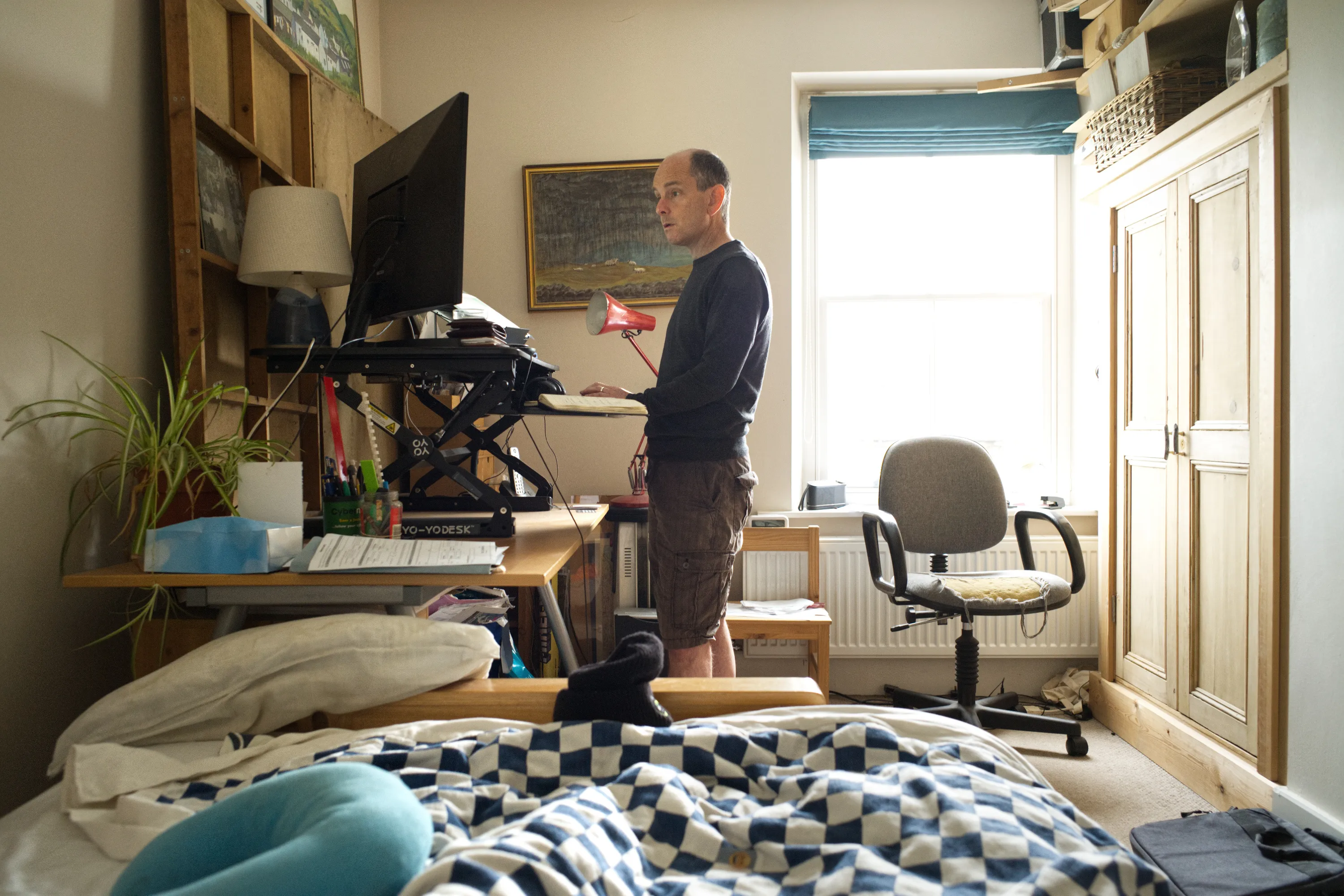
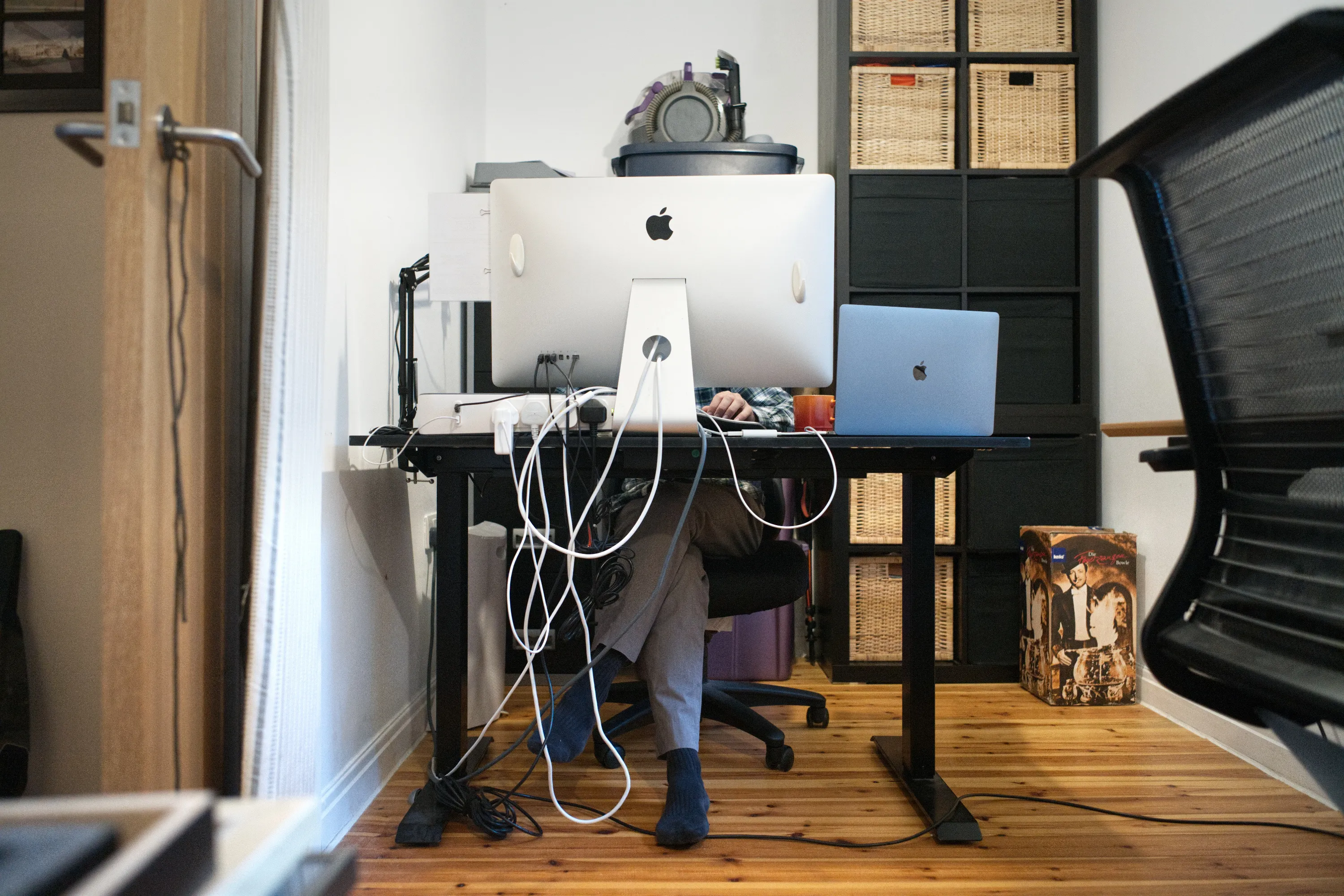
This change is significant. Initially referred to as 'telecommuting', today we know it as 'remote work' or 'work from home'. For many people, their home is now the site where personal and professional spheres intersect. This is shown by spaces that are individually distinct, but often predictably arranged to facilitate electronic screens and cables.
To the observer, the screen-based nature of most work makes it hard to tell professions apart. For example, not long ago, an architect's studio was instantly recognisable by the presence of a drafting table. Today, architects sit at desks interacting with data on screens just like computer programmers and project managers do.
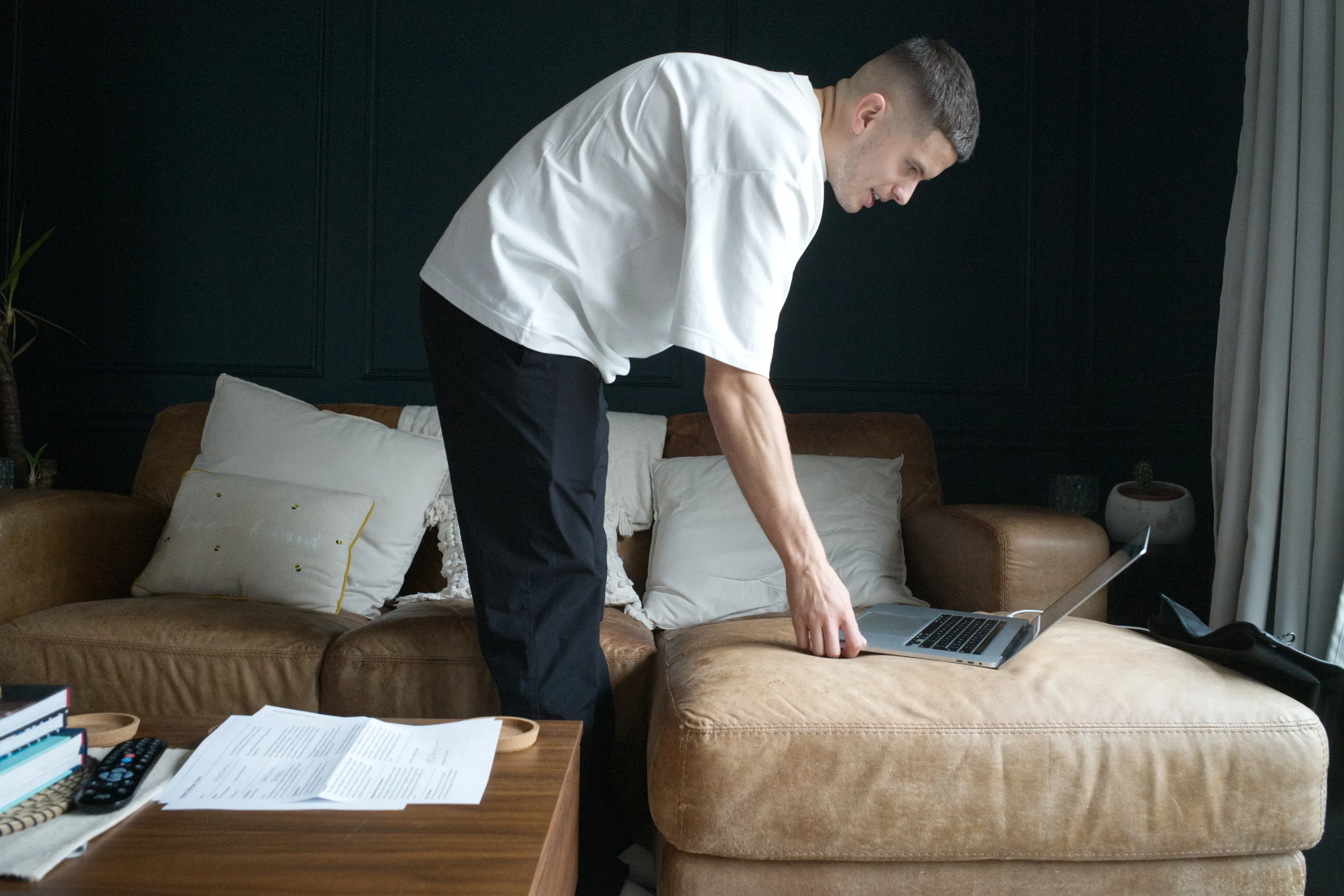
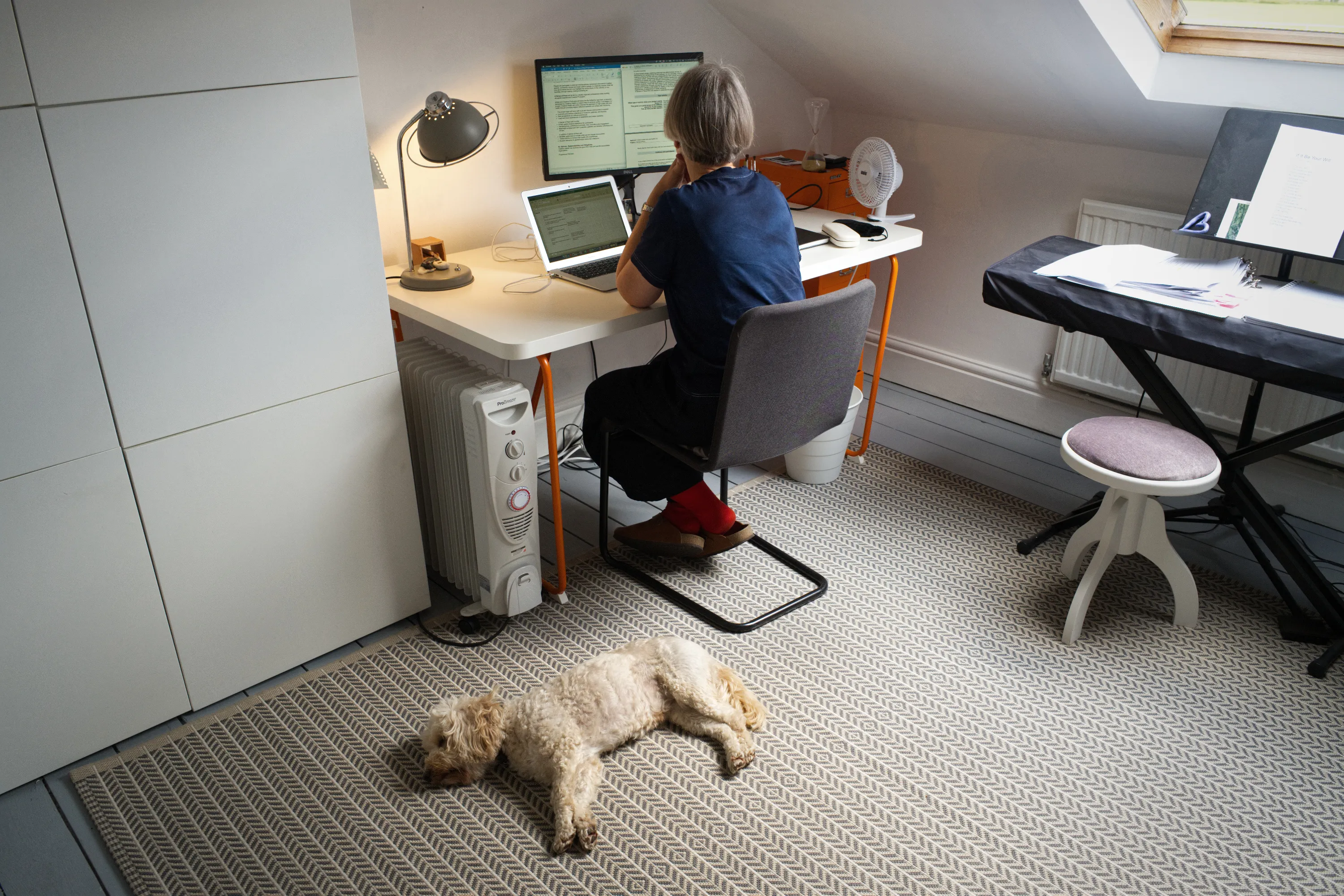
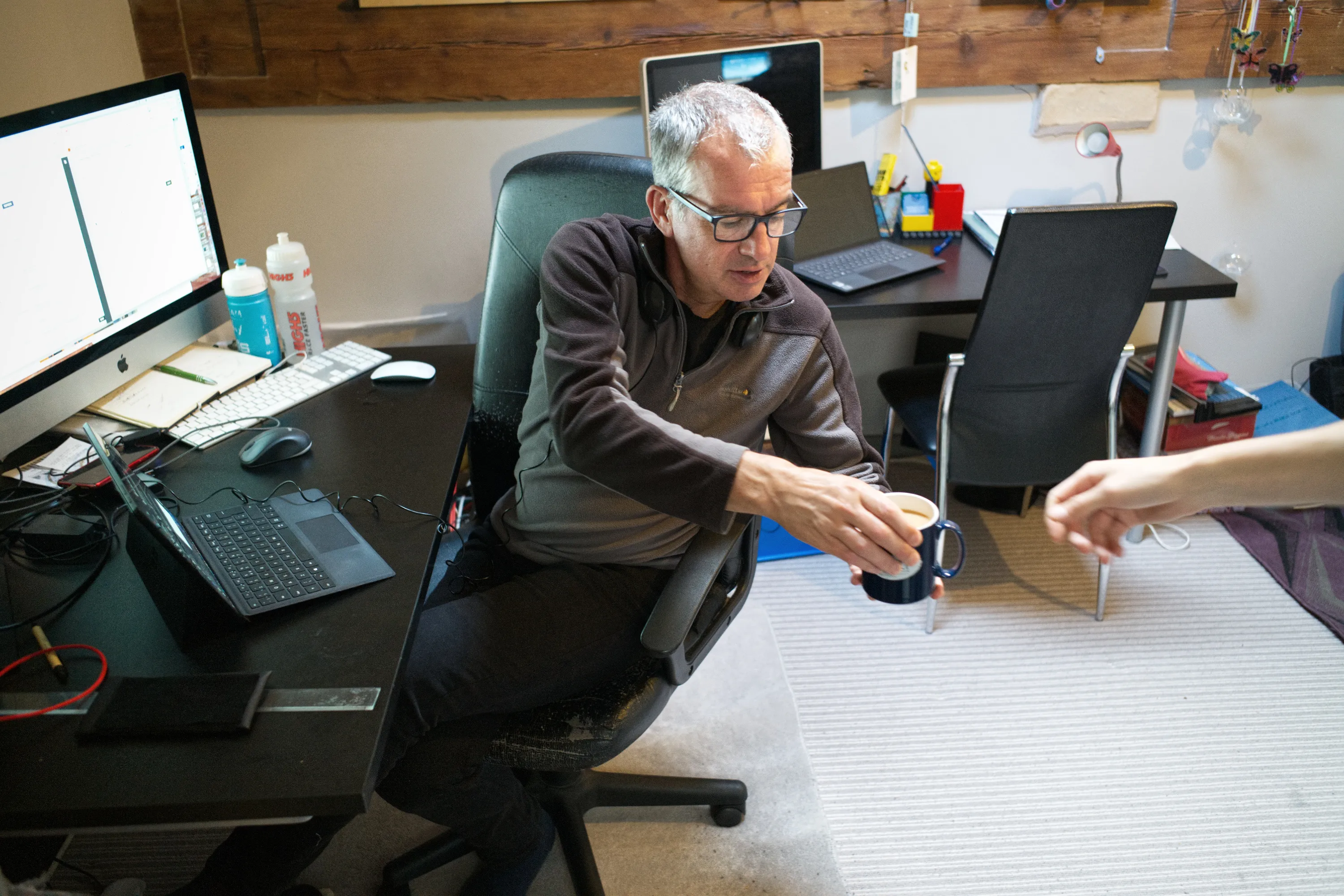
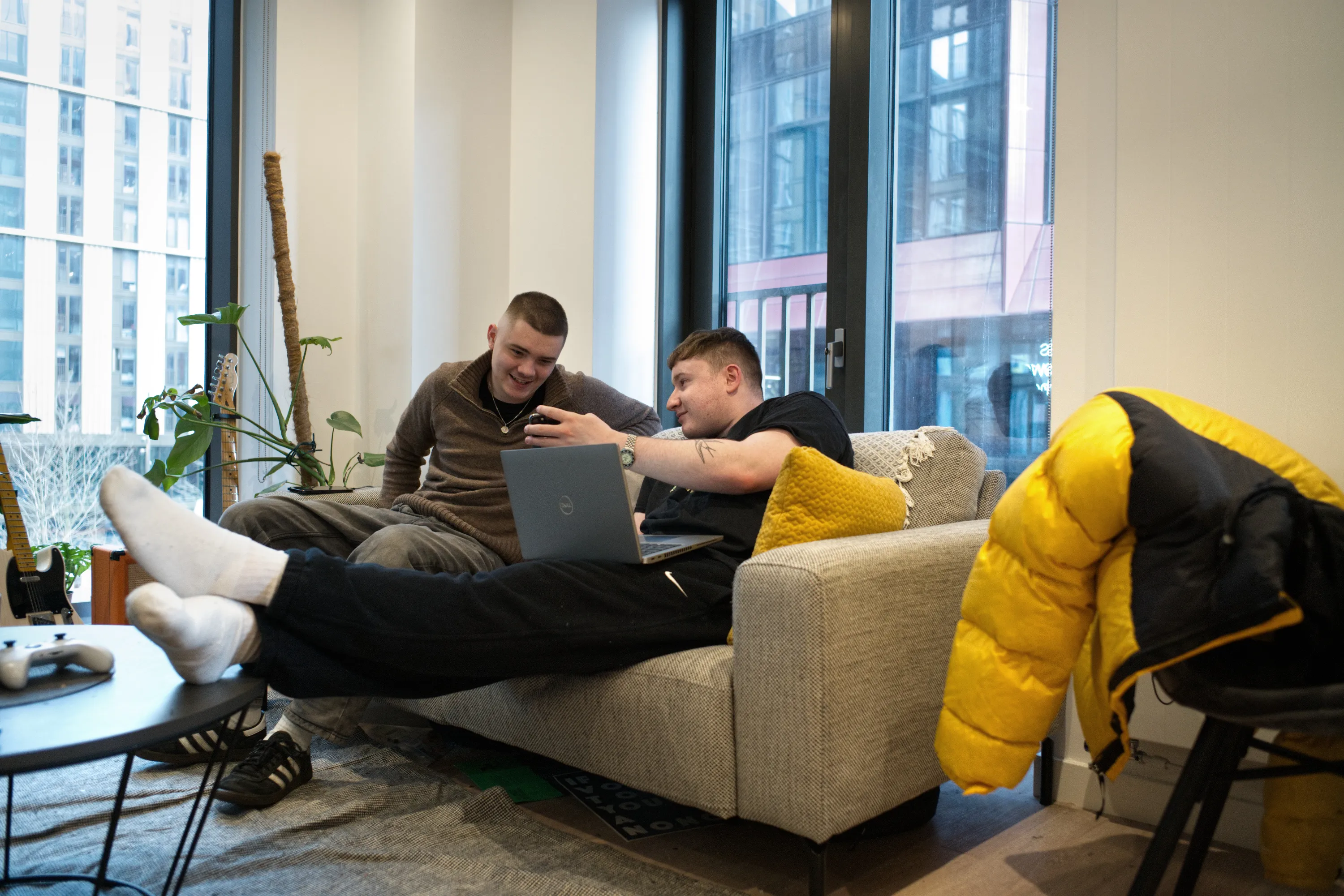
The photographs in this series reveal resilience. They highlight people's capacity to adapt to changing circumstances imposed on them and to embrace opportunities to have their work suit their lives, rather than the other way round. Many participants reported that they find this liberating.
But the photographs also reveal vulnerability and hint at the precariousness of work. The casual quality of the work environments seems to say that a job, and the financial security it implies, is fleeting. There are no guarantees. A few participants also noted that, despite widespread use of messaging apps, the social isolation of working alone can be challenging. The encroachment of work on home life is at times difficult to manage.
Remote working is a bellwether for changing socioeconomic circumstances. It has wider implications for the environment, social patterns, cultural practices, the economy, and government. For example, given that employment is no longer bound by geographical proximity, what are the implications for employees, employers, communities, and the economic and political systems in which they function?
We cannot yet answer such questions because we do not fully understand the impact of the new ways in which we work. What we do know, and what this project stresses, is that there is sustained change and that it will have far-reaching consequences.
For Work from Home, I observed and photographed 80 homeworkers in the North West over a period of 18 months.
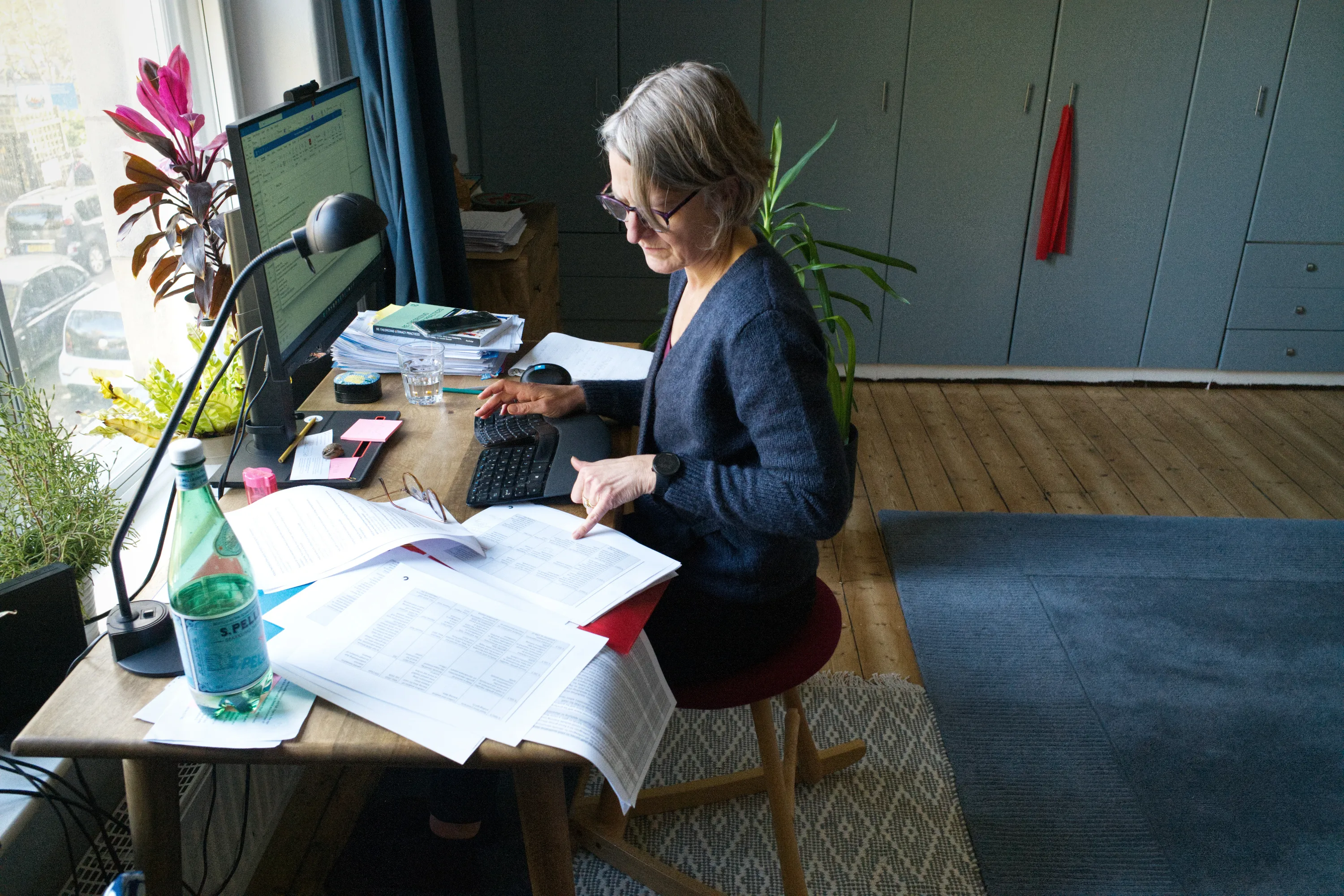
Working with a group of people in person, bouncing ideas around, supporting each other, making things happen is the best feeling in the world and why I love my work; when this is on Zoom, you can feel the screen fatigue off people and it’s just not the same.
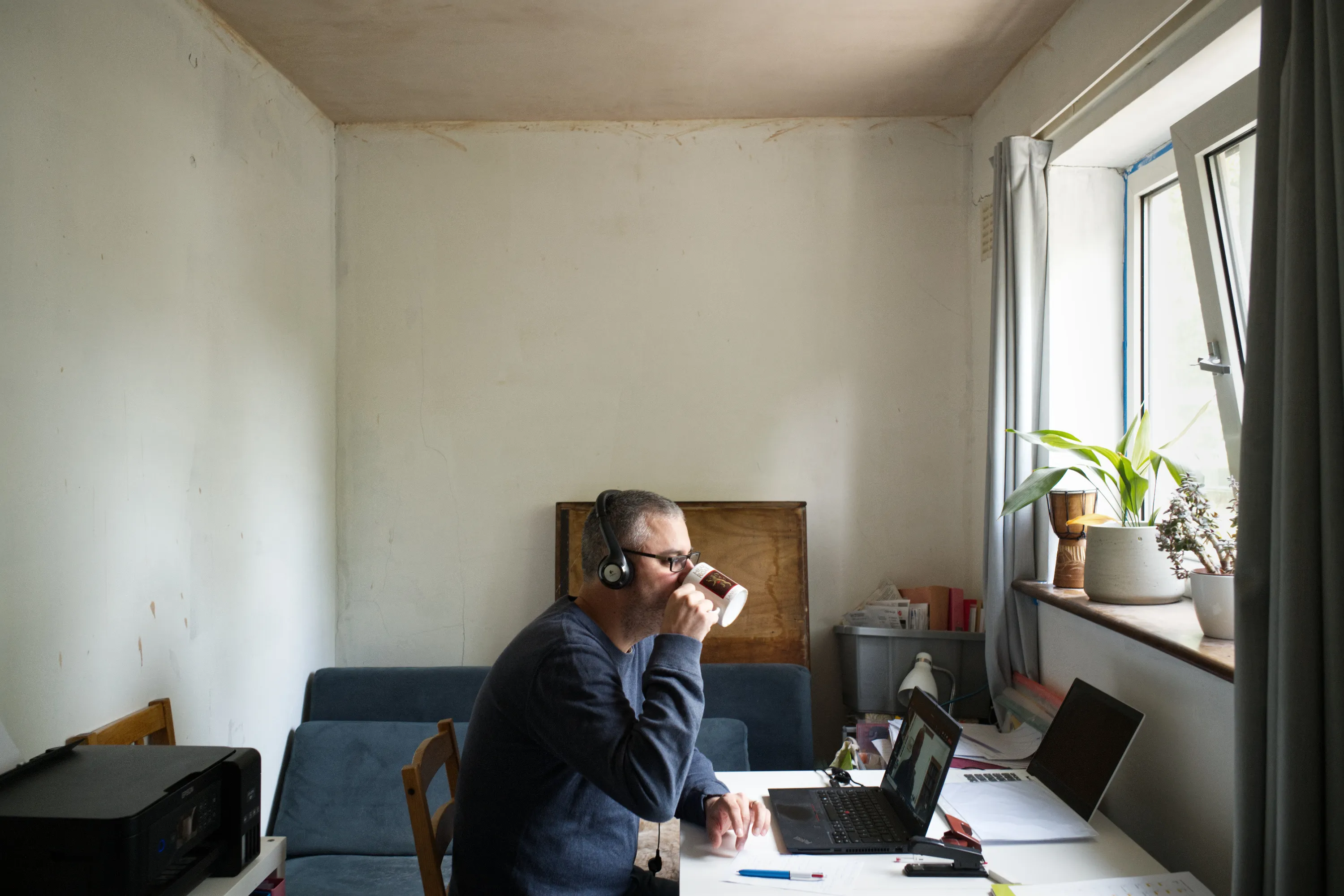
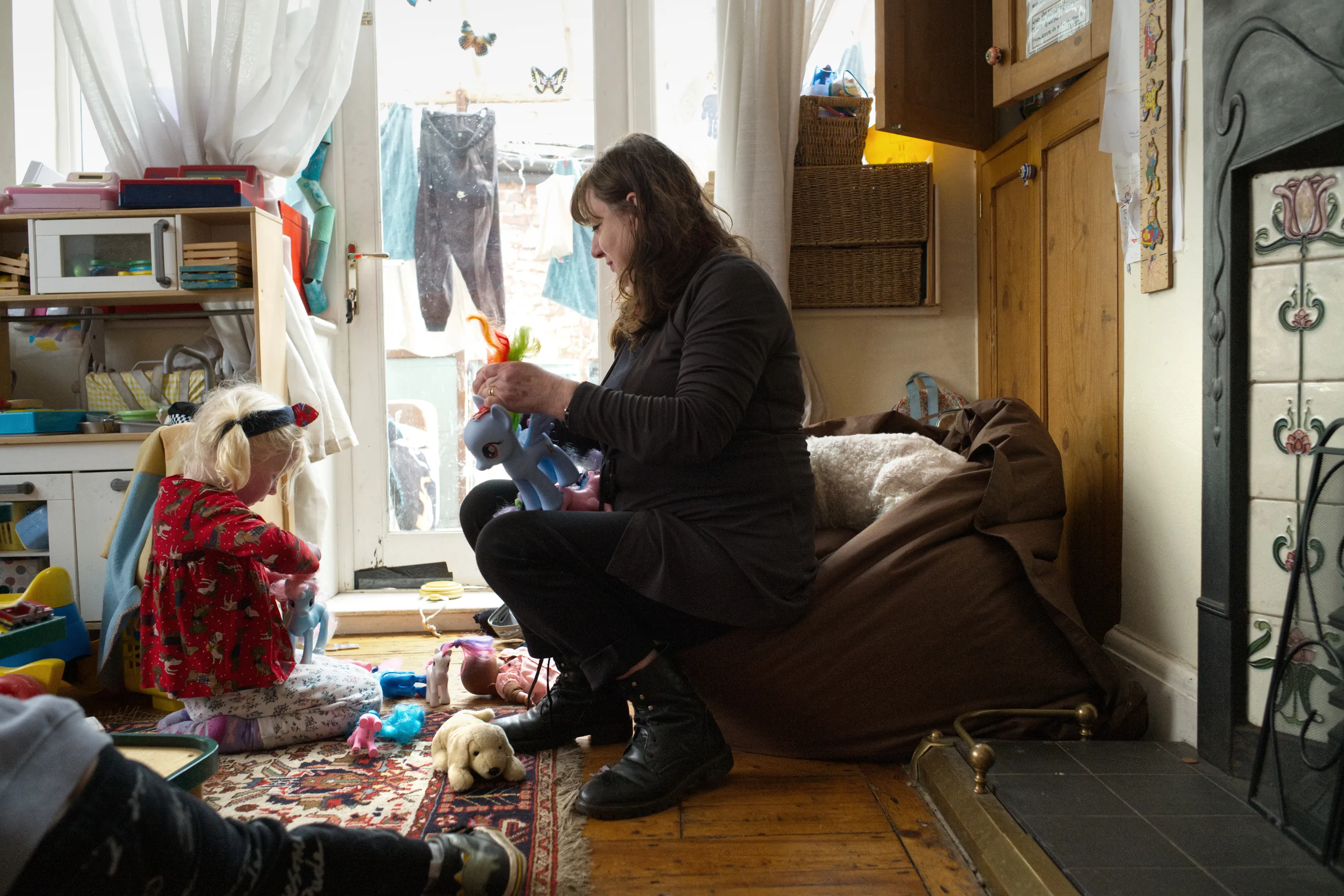
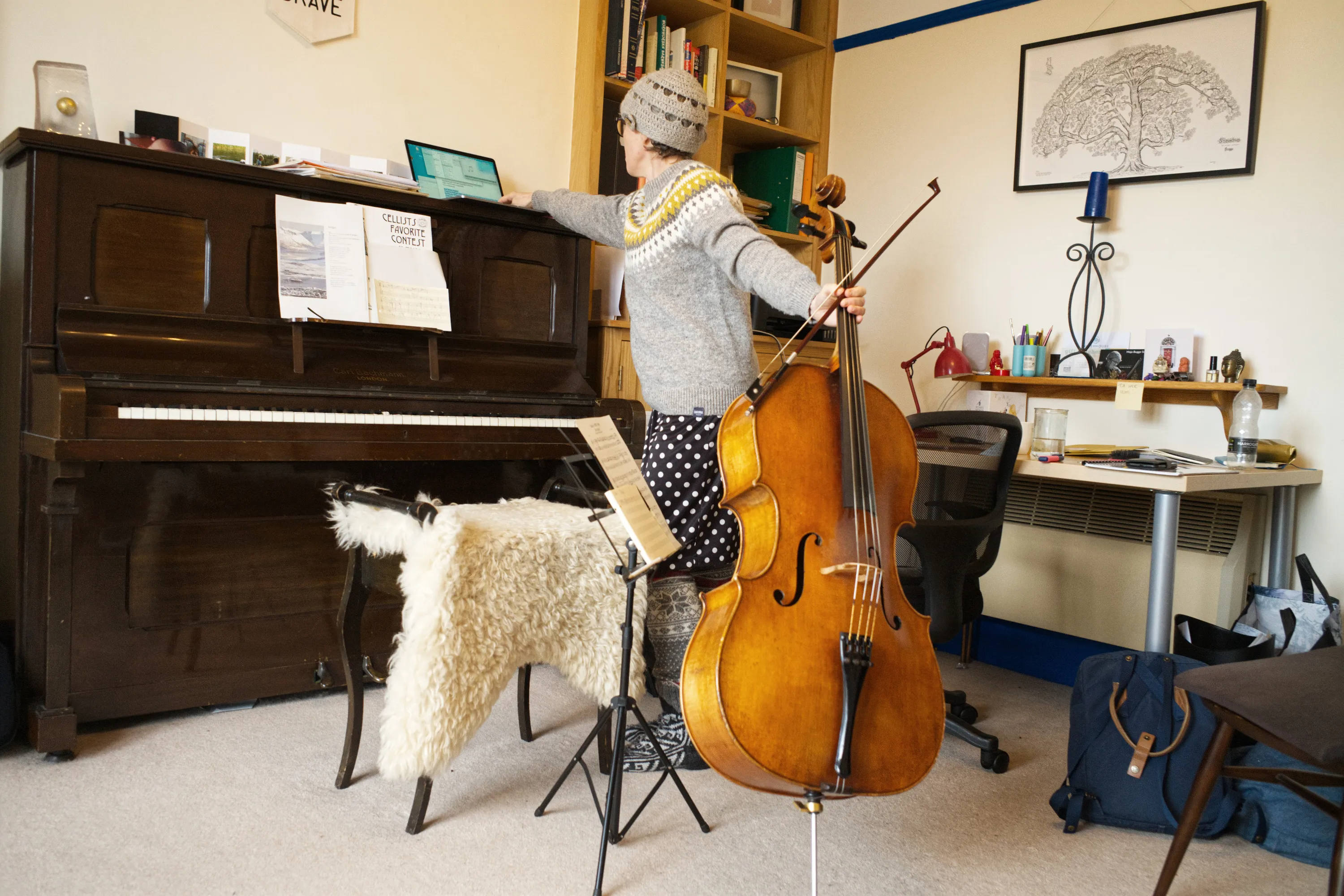
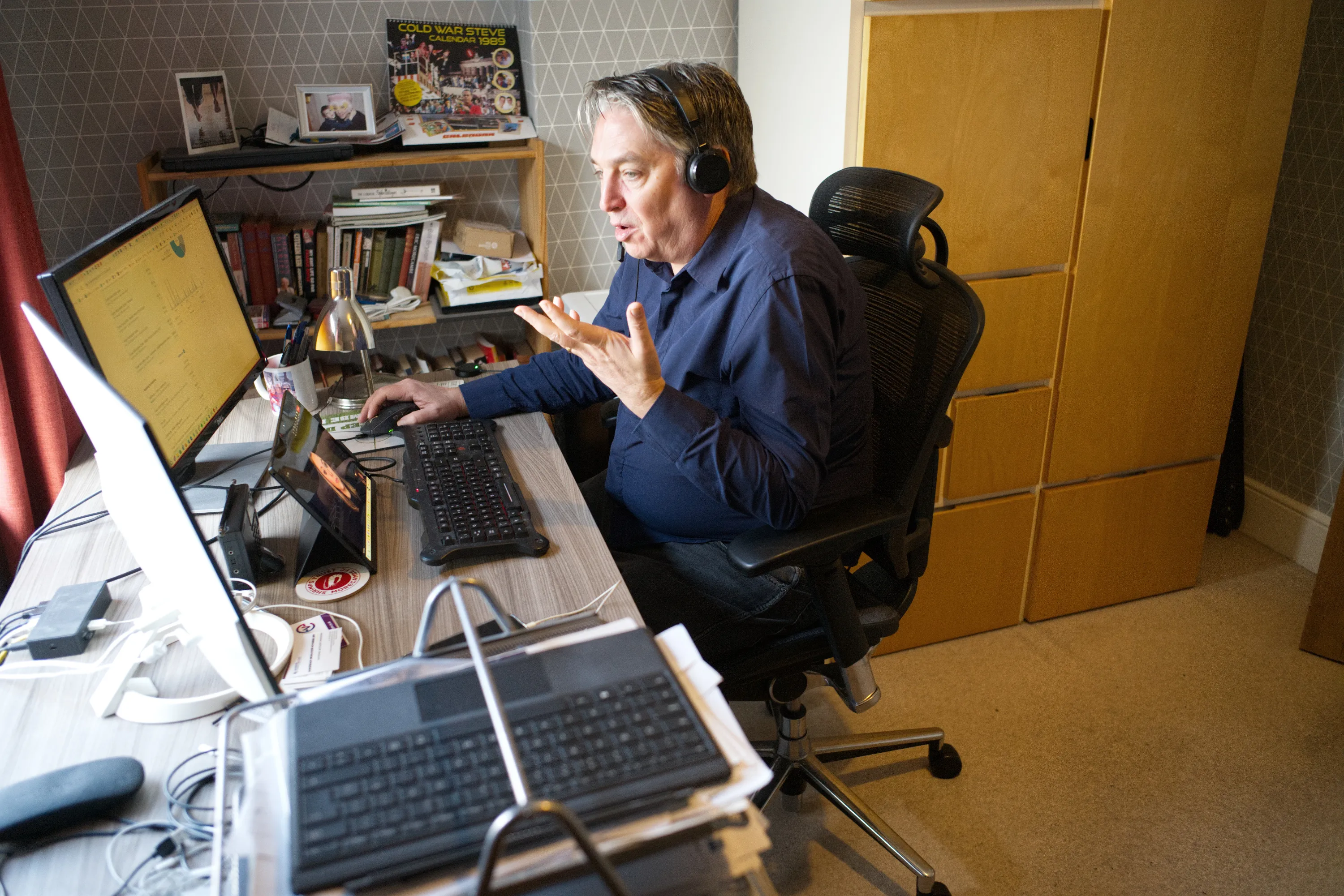
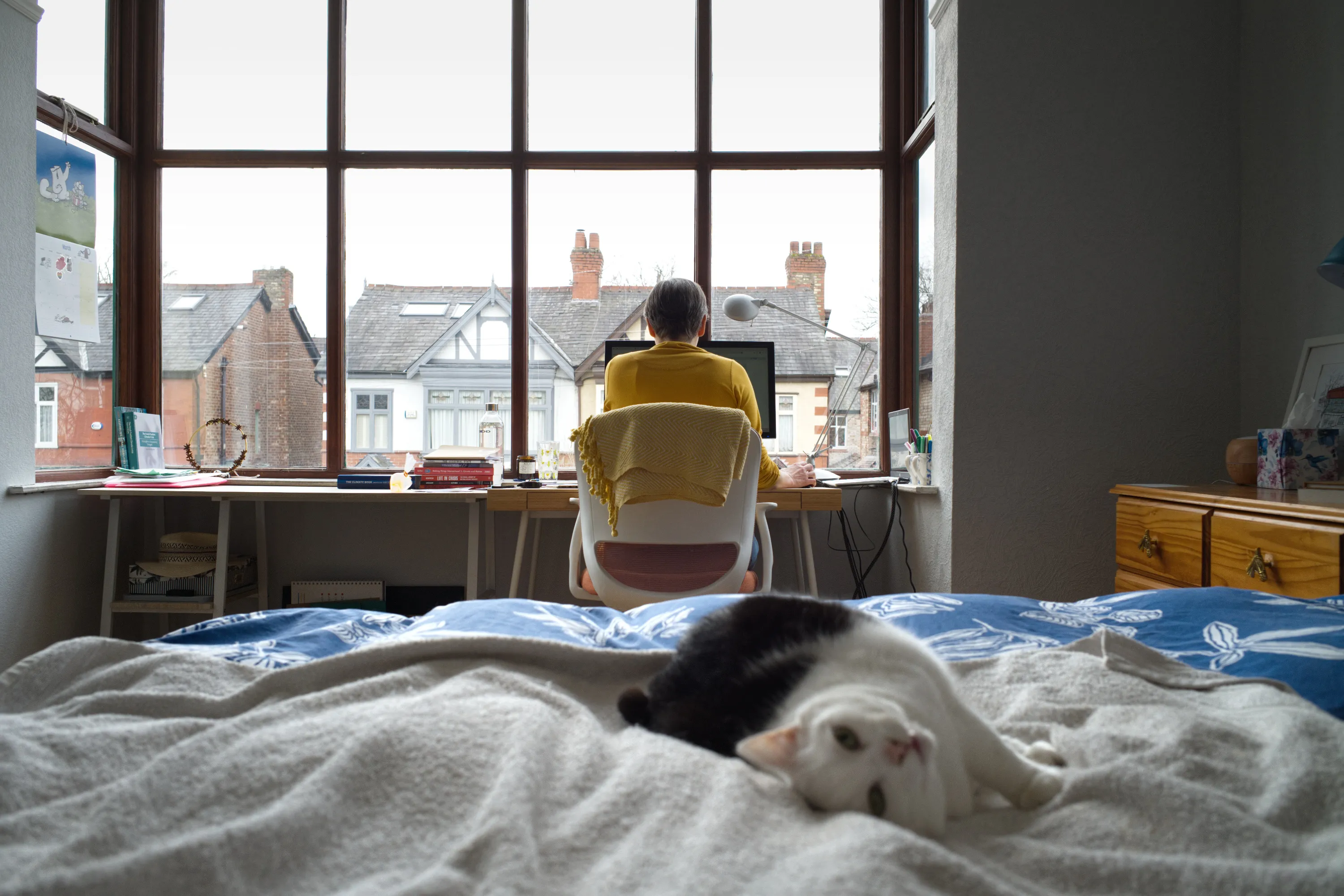
I actually found full time work from home both rewarding and a bit isolating. Rewarding because I felt free to manage my own time, and that nobody was looking over my shoulder if I needed to decompress for 10 minutes. Isolating in a strange sense; I was on calls with people almost all day, but somehow that doesn’t quite feed the soul like seeing people in person does.
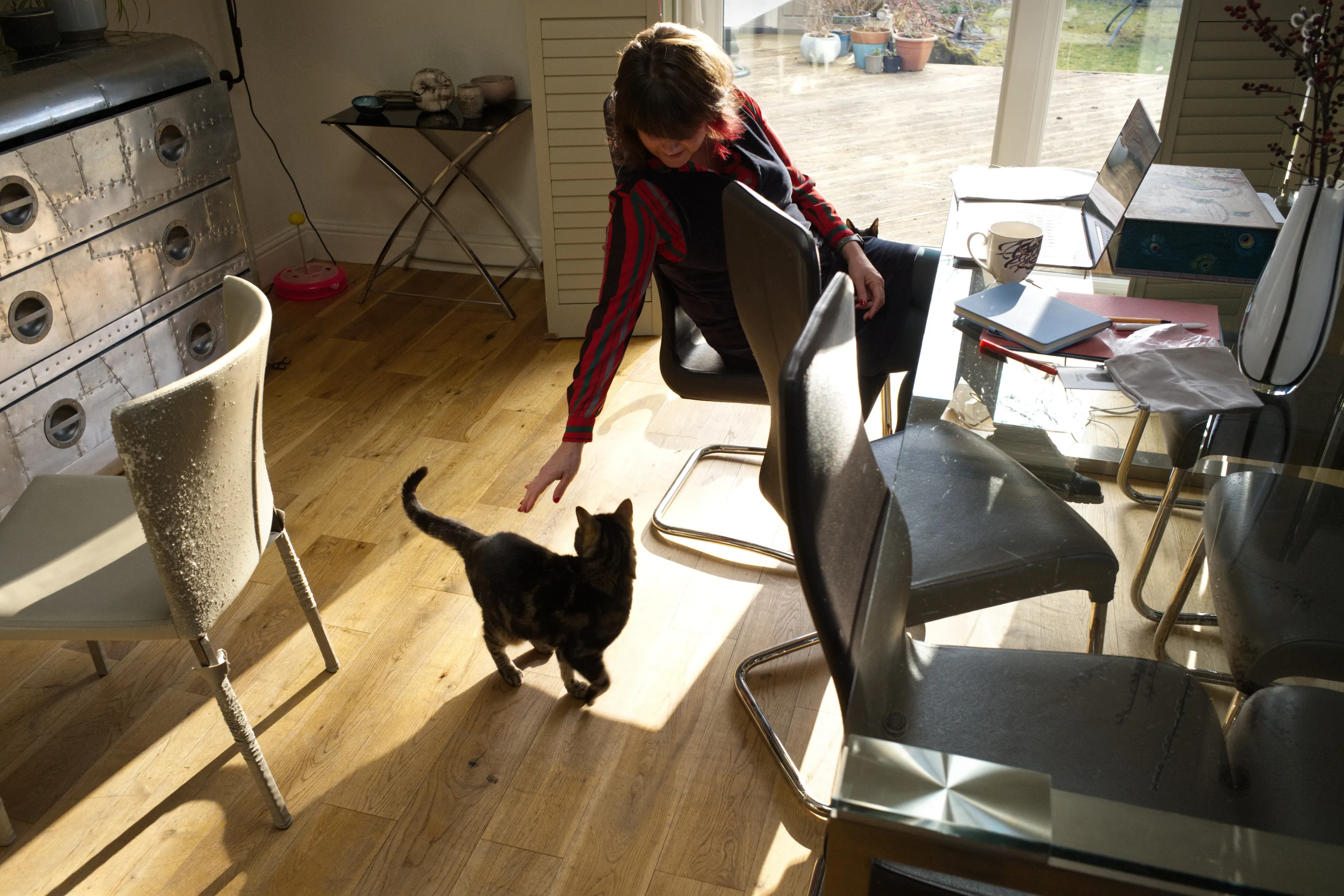
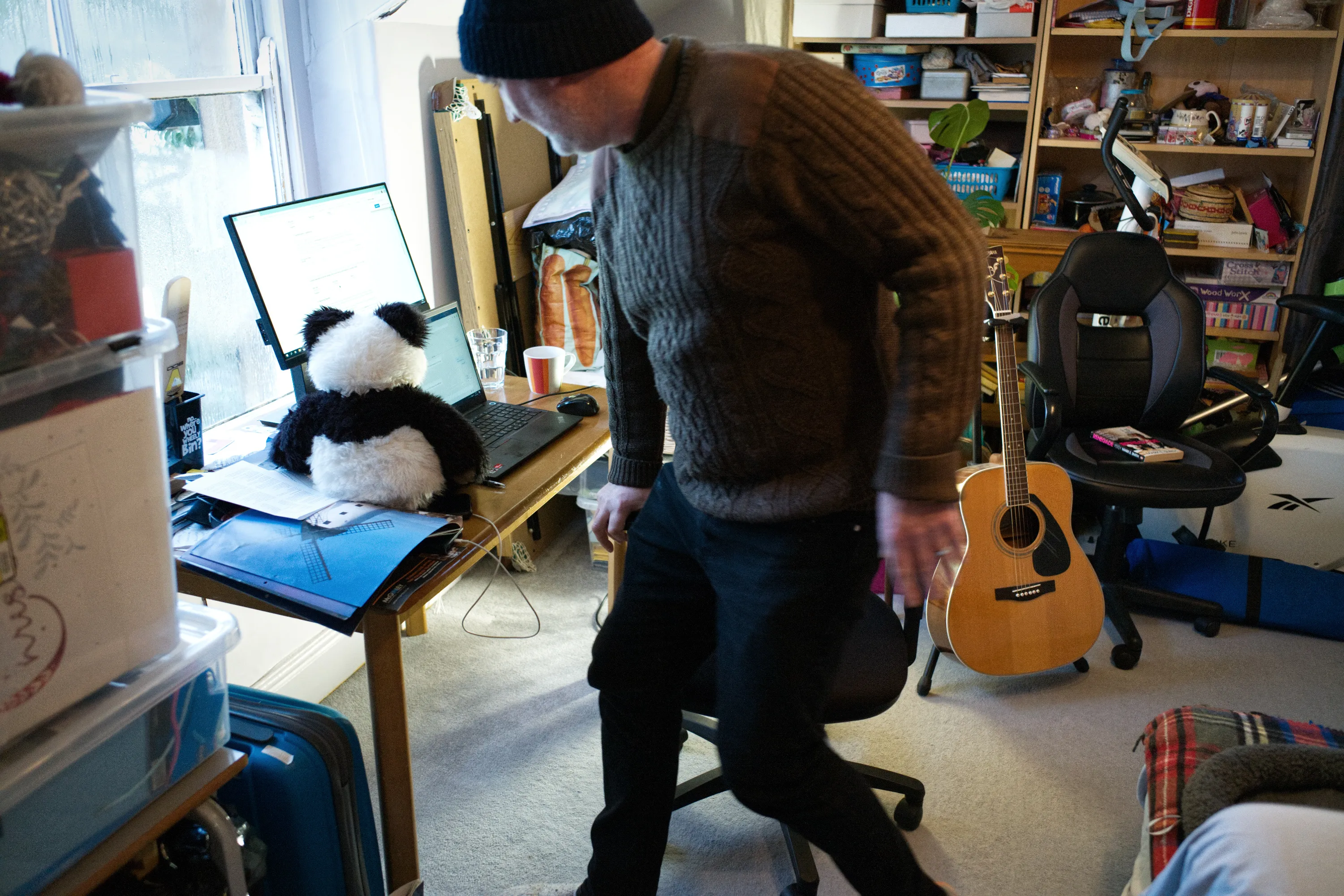
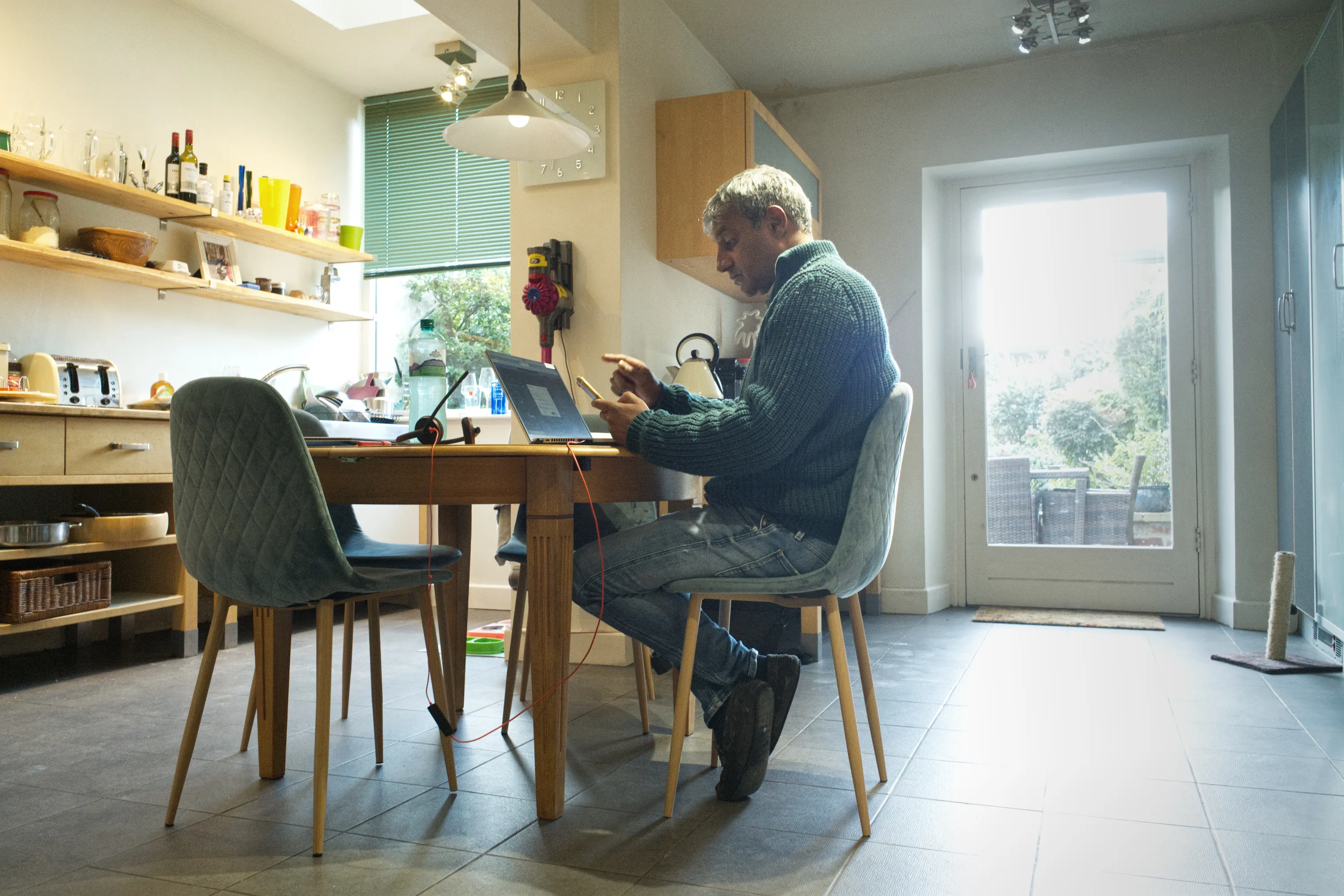
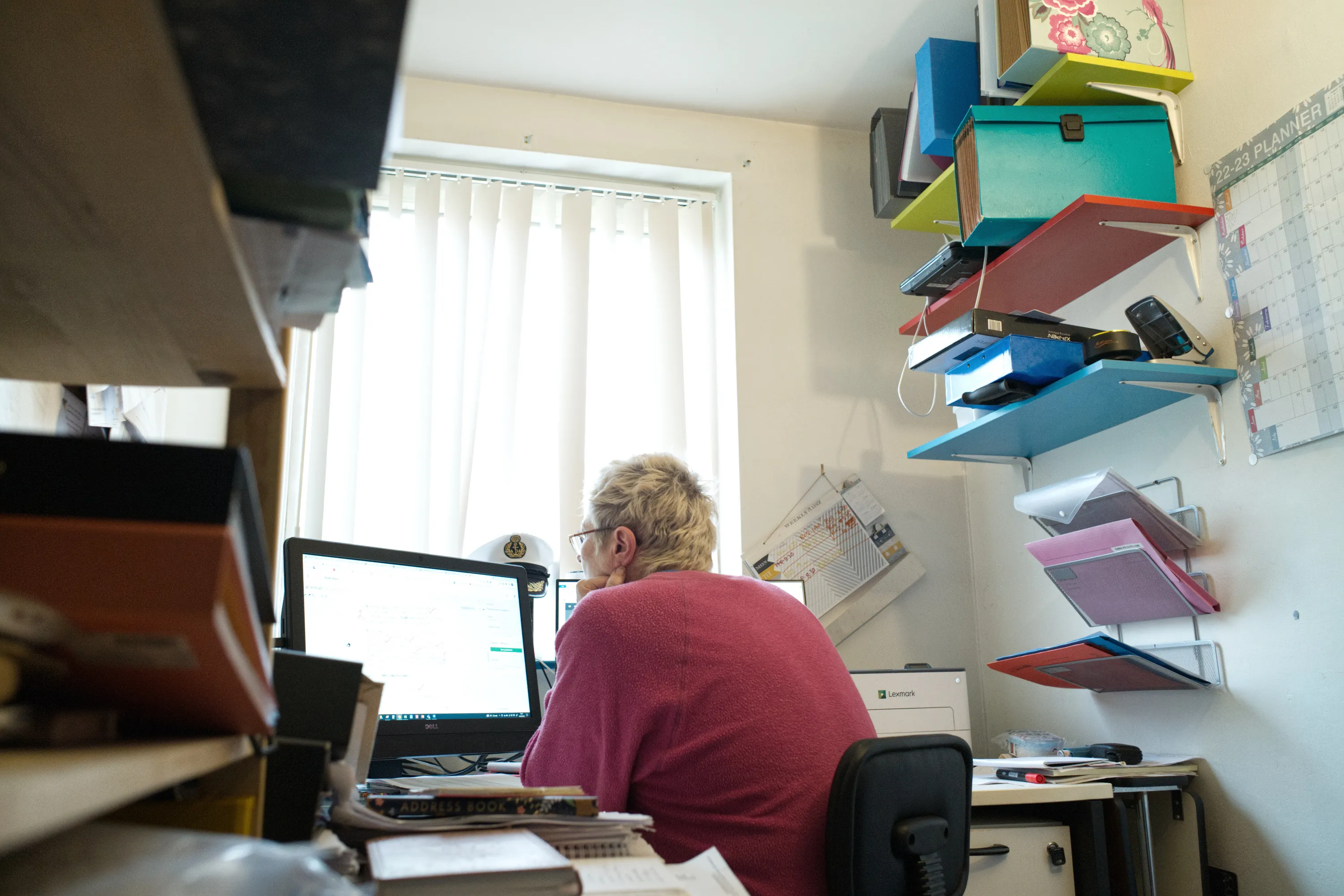
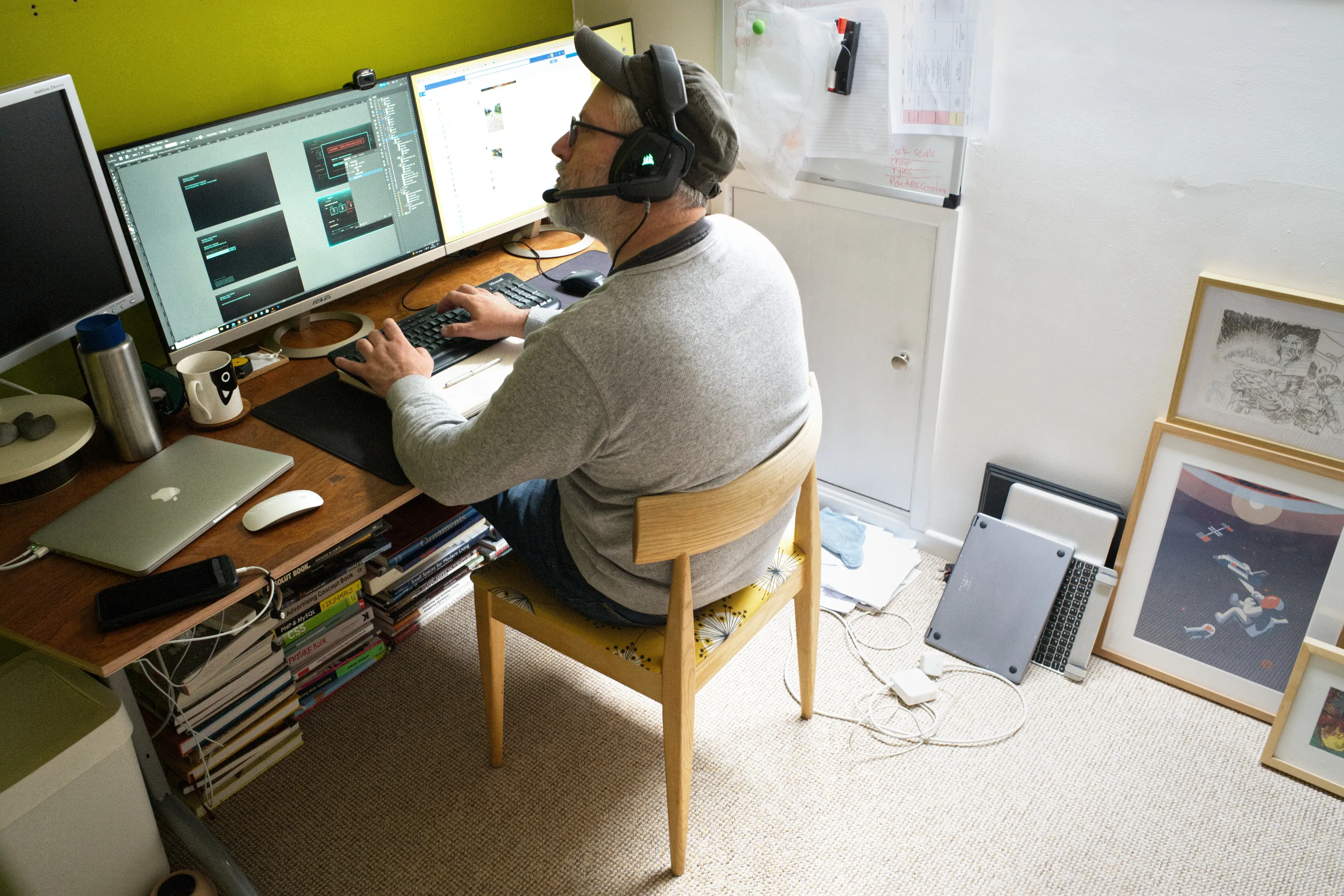
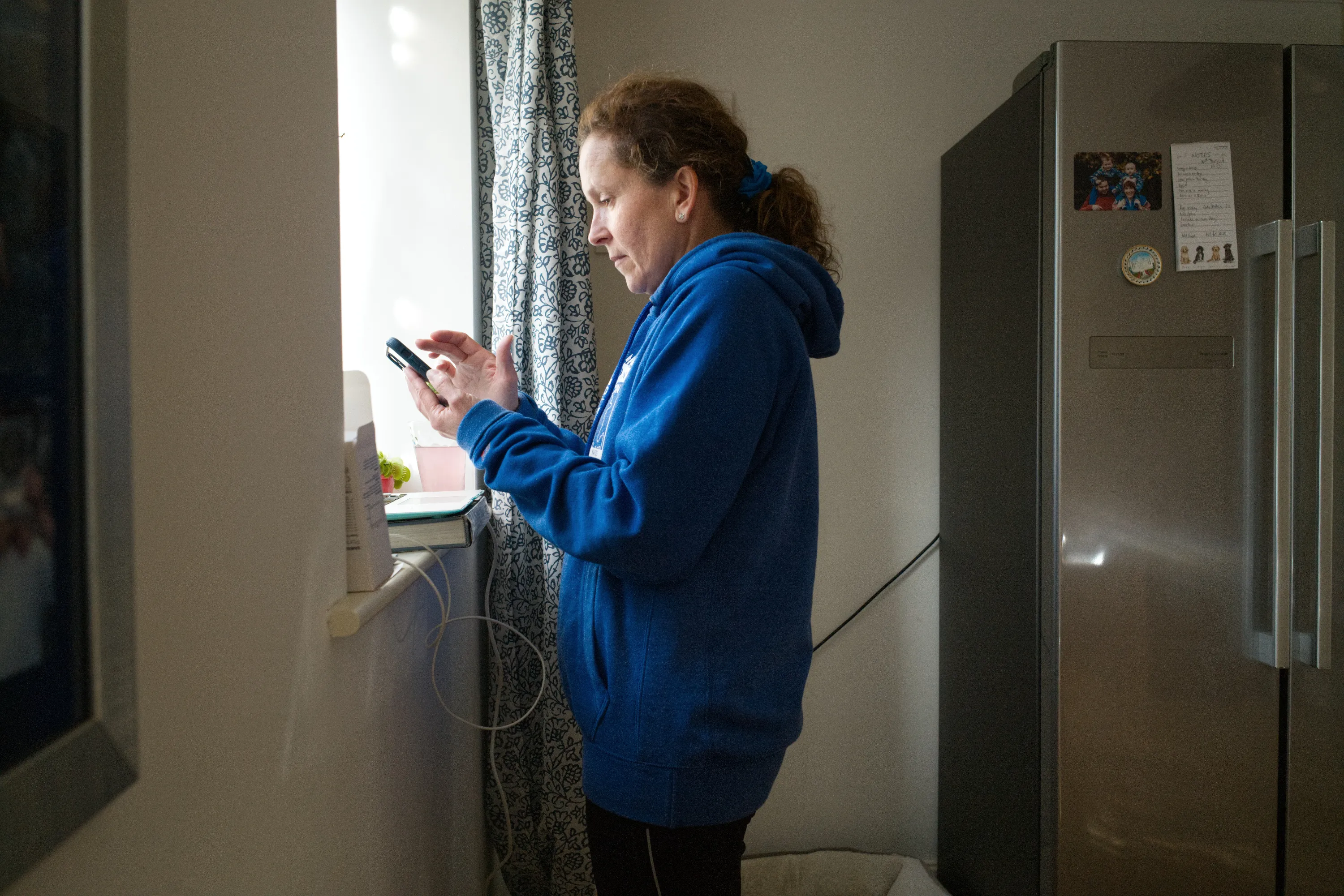
I’ve also found there is a greater diversity of people that I work with. On one project, the team is spread throughout Europe, the USA, and South America. It’s the extension of home comforts into the working life that make each day a bit better, and that’s something that would be hard to give up.
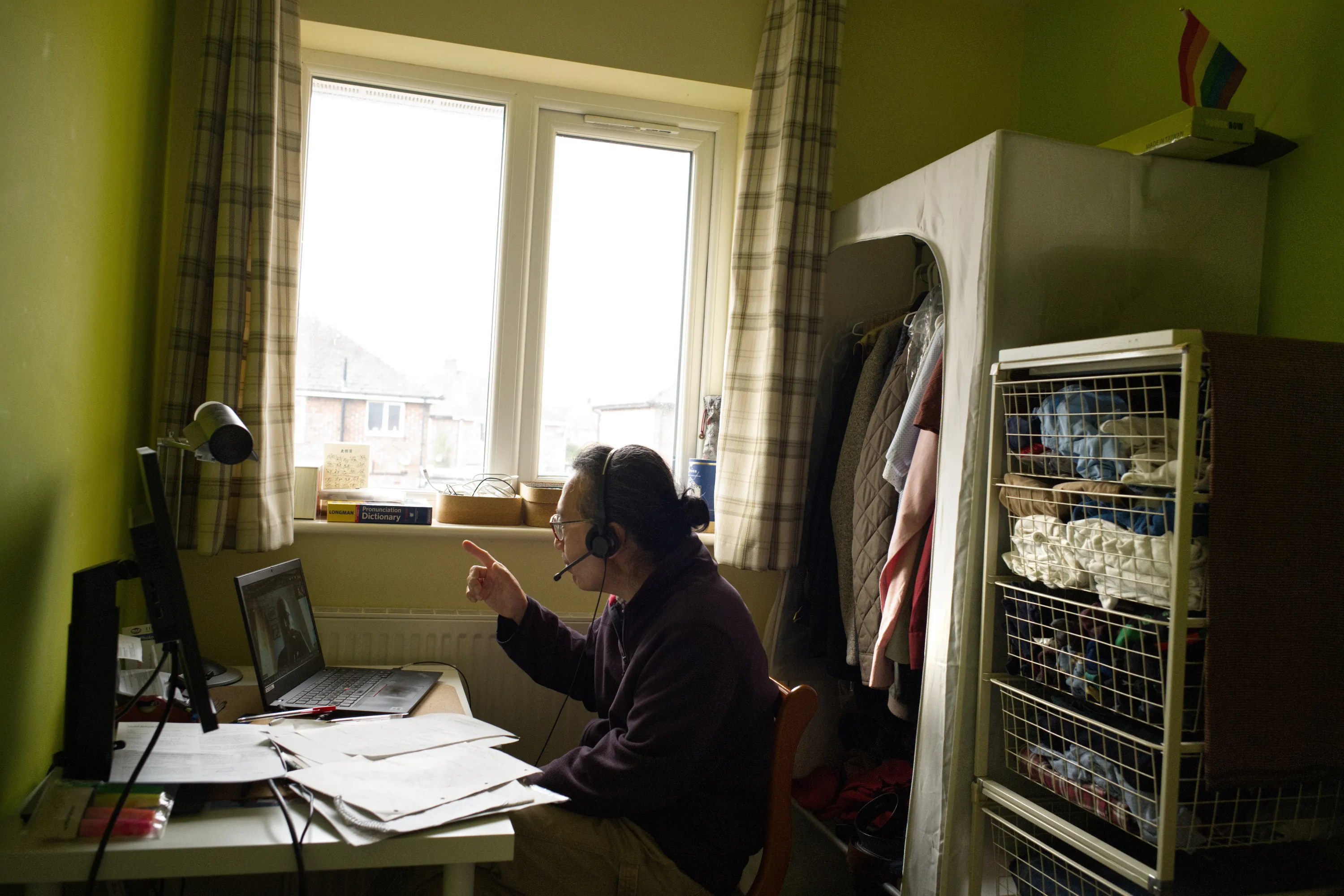
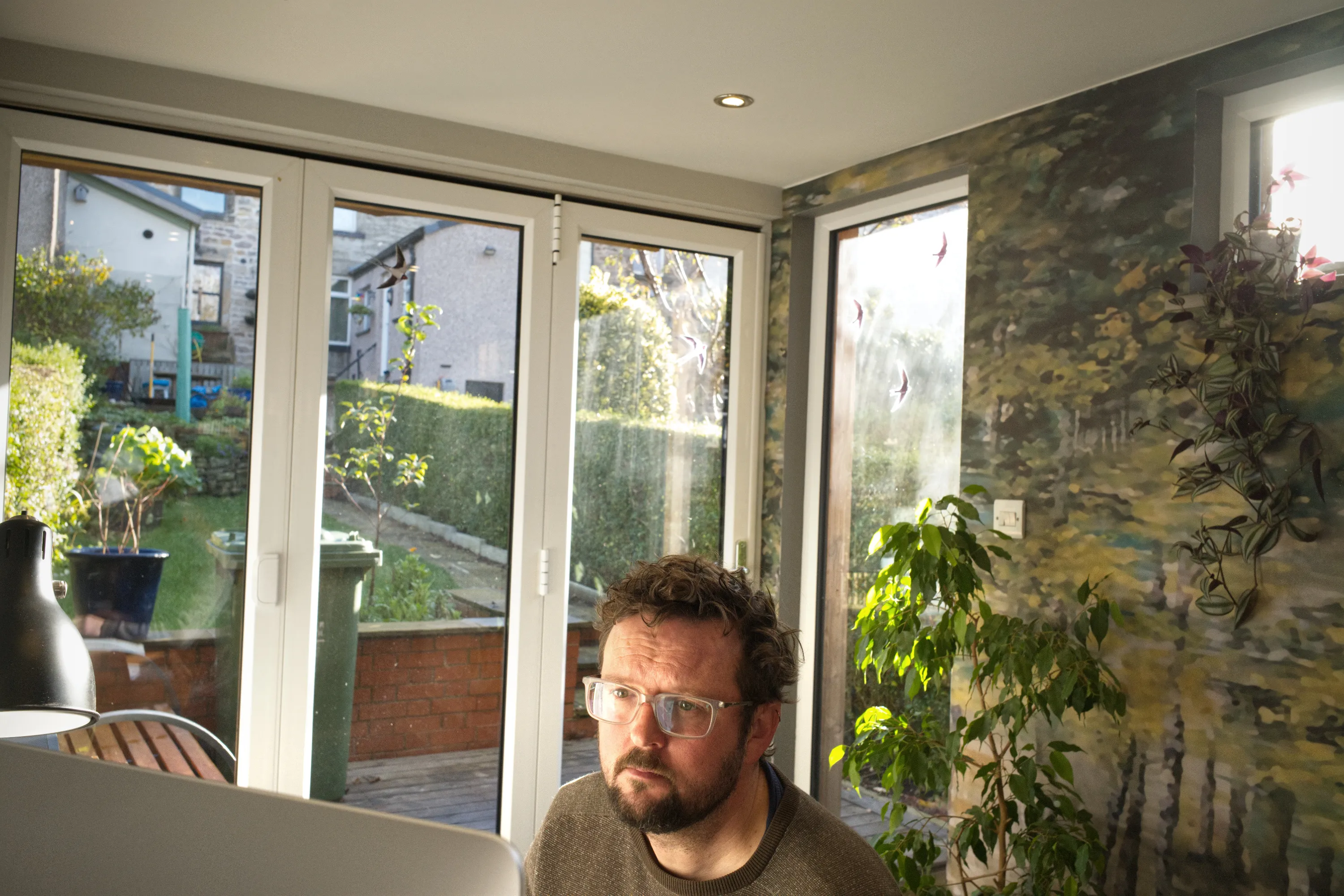
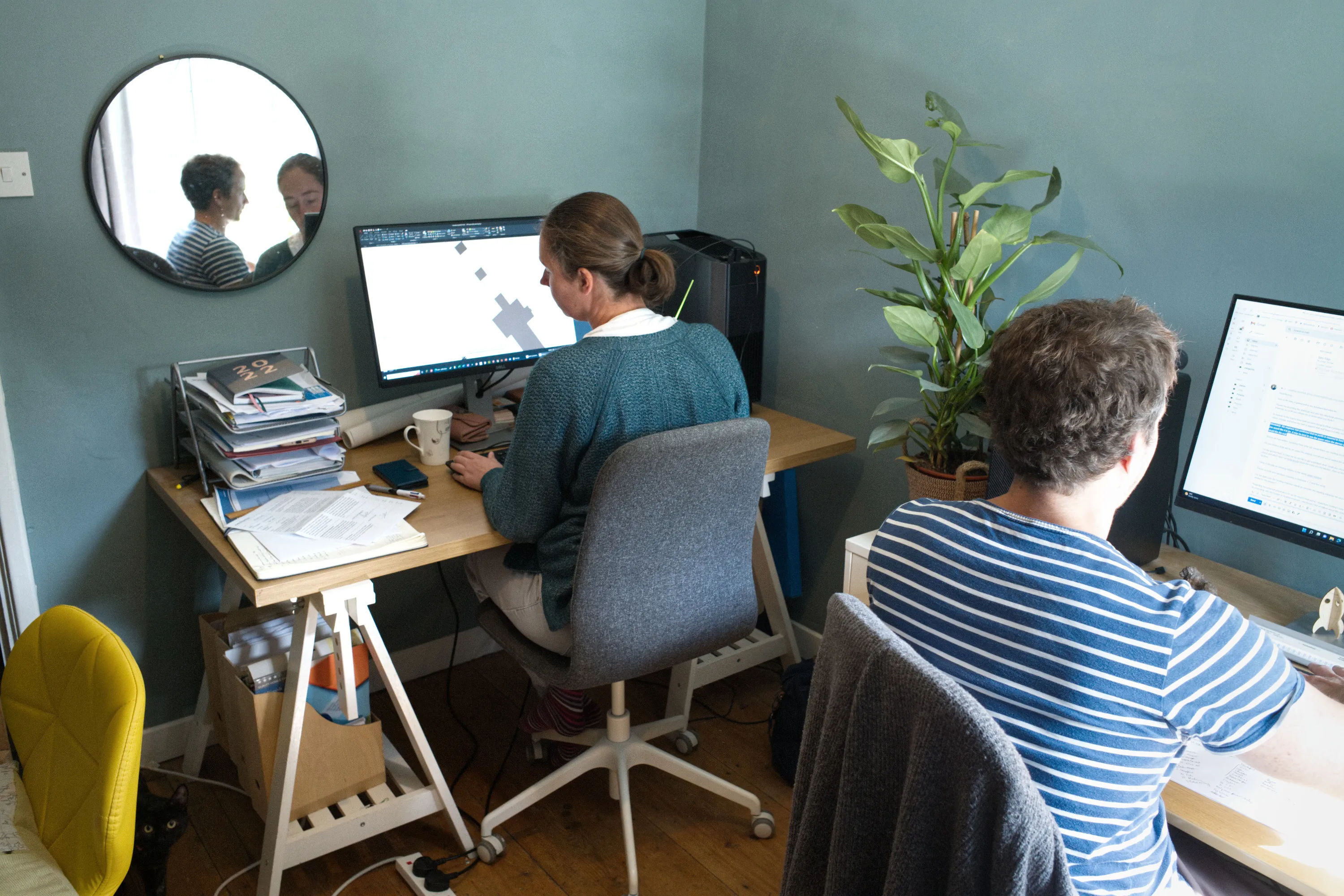
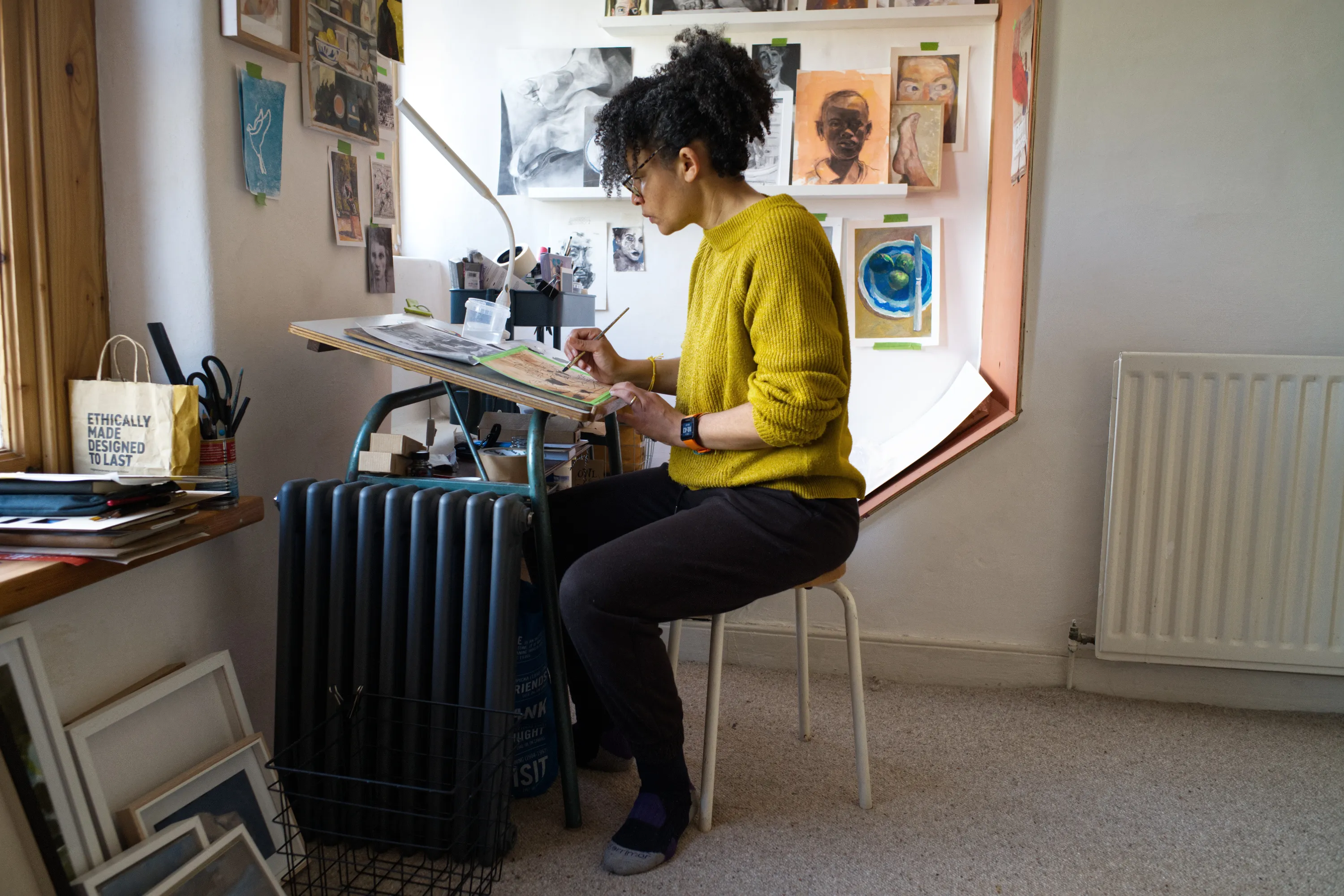
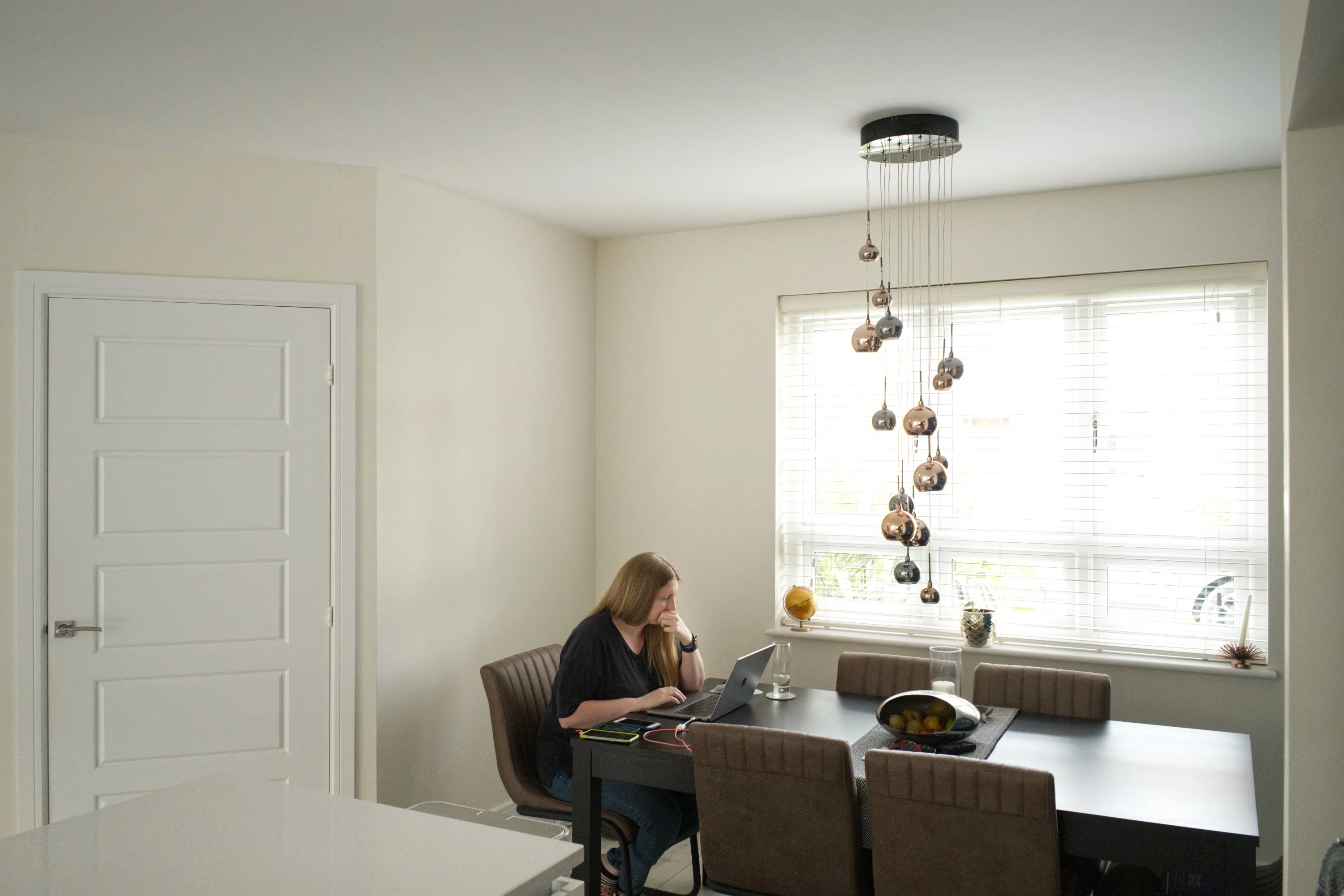
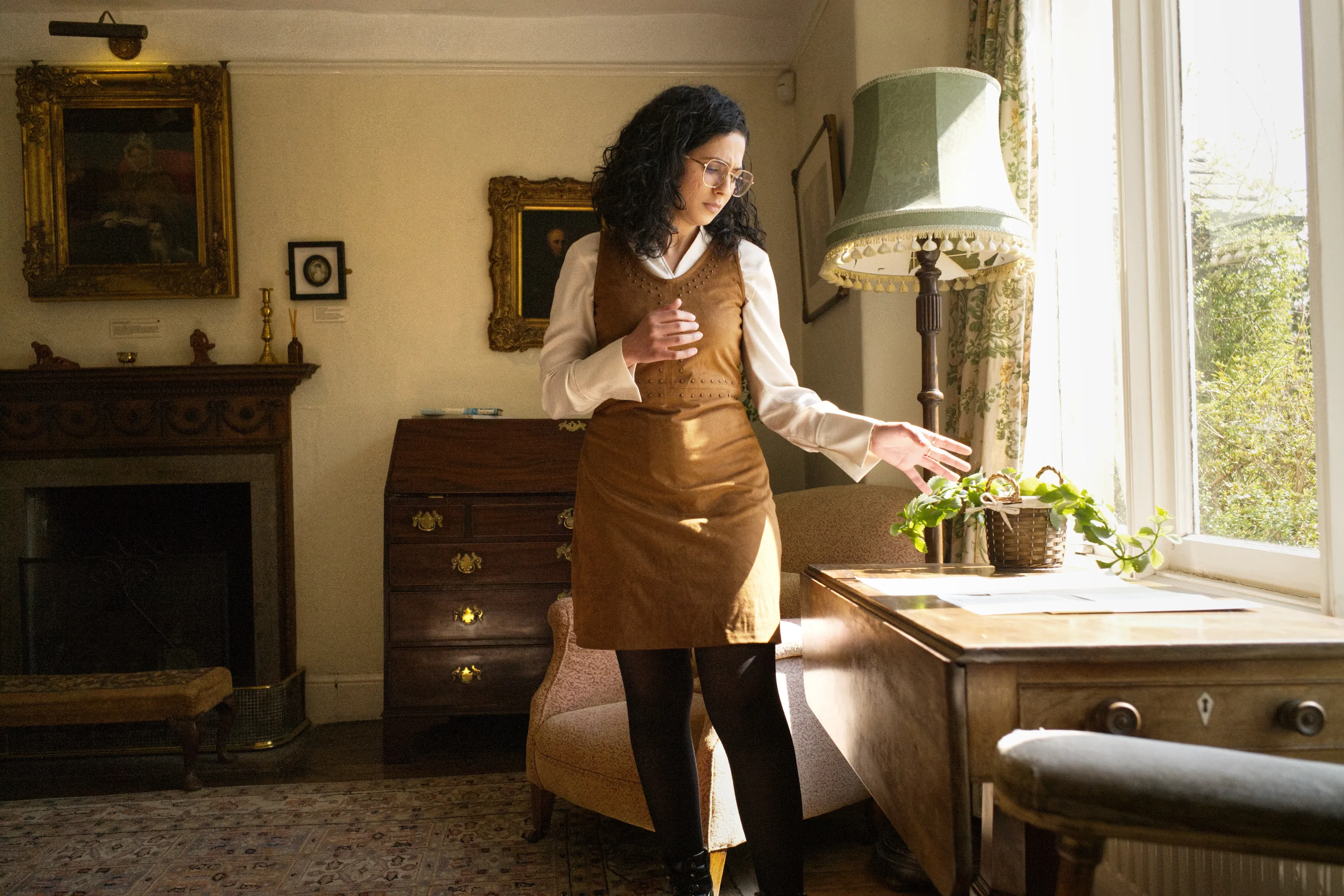
Working from home means two things. The first is comfort. Everything is set up the way I want it to be. Everything is to hand. The second is efficiency. It takes five seconds to move from breakfast to my computer. I get fewer interruptions.
Outputs
- shortlistSelected work, shortlisted for International Photography Exhibition 166, Royal Photographic Society, 2024
- exhibitionWork from Home, The Dukes, Lancaster, 30 April–14 June 2024
- exhibitionWork from Home, The Carlton Club, Manchester, 26 Oct–14 Nov 2023